Need storm & hail damage roof repair in Dallas?
Tell us about your roof and request an estimate. A local provider from our network will follow up so you can compare written quotes at your own pace.
No obligation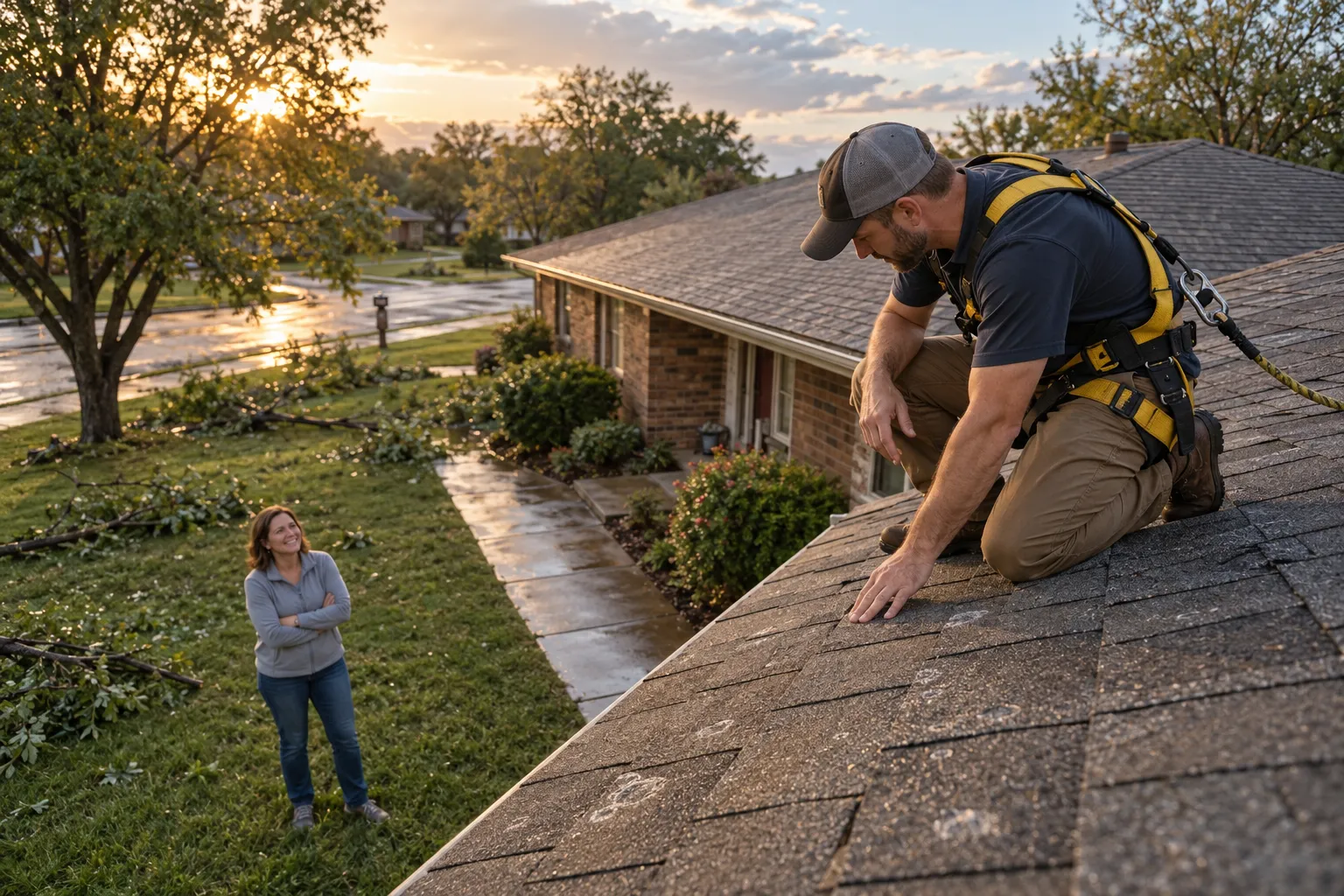
Request an estimate
A storm can hurt a roof in ways you cannot see from the yard. Hail bruises shingles. Wind lifts edges and tears off pieces. Heavy rain finds every gap and sends water into the attic. If this is your first roof problem, the cost and the next steps can feel confusing.
Remainingunit Roofing is a referral service. We do not do the work. We connect homeowners in the Dallas area with independent local providers who inspect the roof and put their findings in a written quote. On this page you will learn what is safe to check yourself, what needs a pro, what drives the price, and how to compare quotes before you spend a dollar.
The wind has dropped and the rain has stopped. Now look at your roof, but only from the yard. Wet shingles are slick, and a damaged deck can give way under your weight. Keep kids and pets away from fallen limbs. Stay clear of any downed lines.
Some jobs are fine for a homeowner. Keep to what is safe from the ground:
Climbing, tarping and checking the deck need harnesses, proper ladders and practice. In hot, humid weather, shingles turn soft and slippery. A tarp pulled tight over a steep slope is hard work even for people who do it daily. Leave anything on the roof itself to a provider.
Hail leaves round dents on gutters, vents and metal flashing. On shingles, look for dark bruises where the gritty granules have been knocked off. Granules piled at the bottom of a downspout are a clue. A soft spot when pressed means the mat underneath may be hurt.
Wind lifts, creases and tears off shingles. Look for bare strips, curled corners and pieces on the lawn. Tropical storm gusts also push rain sideways under flashing and around vents. Brown rings on a ceiling often show where that water got in.
Emergency roof repair usually means a tarp or patch over the worst spot, not a finished fix. Many providers can respond quickly, though availability varies after a big storm. Ask what the temporary work costs and whether it is separate from the permanent repair. Keep your receipts.
Water always finds the weak spot. In our warm, humid climate, wet insulation and decking can grow mold fast. A small leak becomes stained drywall, then rotted wood. Heavy downpours often return in storm season, so a patched roof gets tested again. Acting early usually keeps the bill smaller.
A good provider checks more than the shingles. Expect them to look at:
Ask for photos and a written list of what they found.
A few missing shingles on one slope often point to a repair. Hail across every slope, or a roof already near the end of its life, may point to hail damage roof replacement. Ask for both options priced in writing. Compare written quotes before you choose.
Some policies may cover sudden wind or hail damage. Check your policy, and look at the deductible, which in storm areas can be a percent of the home value. Providers can often help document damage for a claim. Take your own photos first. Your insurer decides what is covered, not the provider.
After a storm, strangers may knock. Some are honest local roofing contractors. Others disappear after taking a deposit. Never sign on the spot. Ask for ID, a local address and proof of coverage. Be wary of a big upfront payment, and never sign anything that hands over control of your claim.
Request a callback to check provider availability in your area.
Roof size and pitch come first. Then come the number of layers, hidden deck damage, the material and how easy the roof is to reach. Busy storm weeks can also nudge prices up. Itemized quotes let you see where the money goes and compare fairly.
A provider looks at every slope, flashing and vents, then writes down what hail or wind did.
Clear photos of damage help you explain the problem to your insurer.
Tarps or patches can keep water out while you decide on the permanent fix.
Repair and replacement choices are priced in writing, so you can compare them side by side.
Prices vary a lot by roof size, pitch, material and how much hidden damage is found. These are typical U.S. ranges only. Get a written quote from more than one provider before you decide.
| Item | Typical range | Notes |
|---|---|---|
| Temporary tarp or patch | $300 – $1,500 | Stops leaks; permanent work is extra |
| Replace a few shingles | $250 – $1,000 | Fits small wind damage |
| Flashing or vent repair | $200 – $800 | Common after strong gusts |
| Partial slope repair | $1,000 – $3,500 | May include some decking |
| Decking replacement | $3 – $7 per sq ft | Found once old shingles come off |
| Full roof after hail | $8,000 – $25,000 | Size, pitch and material drive price |
Look from the ground, note damage, and photograph everything with the date before anything is moved.
Send a short request and a local provider from our network will reach out.
The provider checks the roof and attic, then explains what the storm did.
Review itemized quotes, ask questions, and pick the option that fits your budget and roof.
We explain price drivers and next steps in simple words before you talk to anyone.
You are matched with independent providers who know area storms and building styles.
Providers give written estimates, which makes side-by-side comparison easy and fair.
Requesting an estimate carries no obligation, so you can take time to decide.
Tell us about your roof and request an estimate. A local provider from our network will follow up so you can compare written quotes at your own pace.
No obligationLook from the ground for dented gutters, vents and flashing, plus dark bruised spots or bare patches on shingles. Hail damage is often hard to see, so have a provider inspect the roof.
No. Wet, hot shingles are slippery and a weak deck can give way. Check from the ground with binoculars and photos, then let a provider handle anything on the roof.
Some policies may cover sudden wind or hail damage, but it depends on your policy and deductible. Check your policy, take photos, and ask providers to help document the damage for a claim.
Tell us about your roof and request an estimate. A local provider from our network will follow up so you can compare written quotes at your own pace.
No obligation