Need home roof repair in Dallas?
Tell us about your roof and request an estimate. A local provider from our network will follow up so you can compare written quotes at your own pace.
No obligation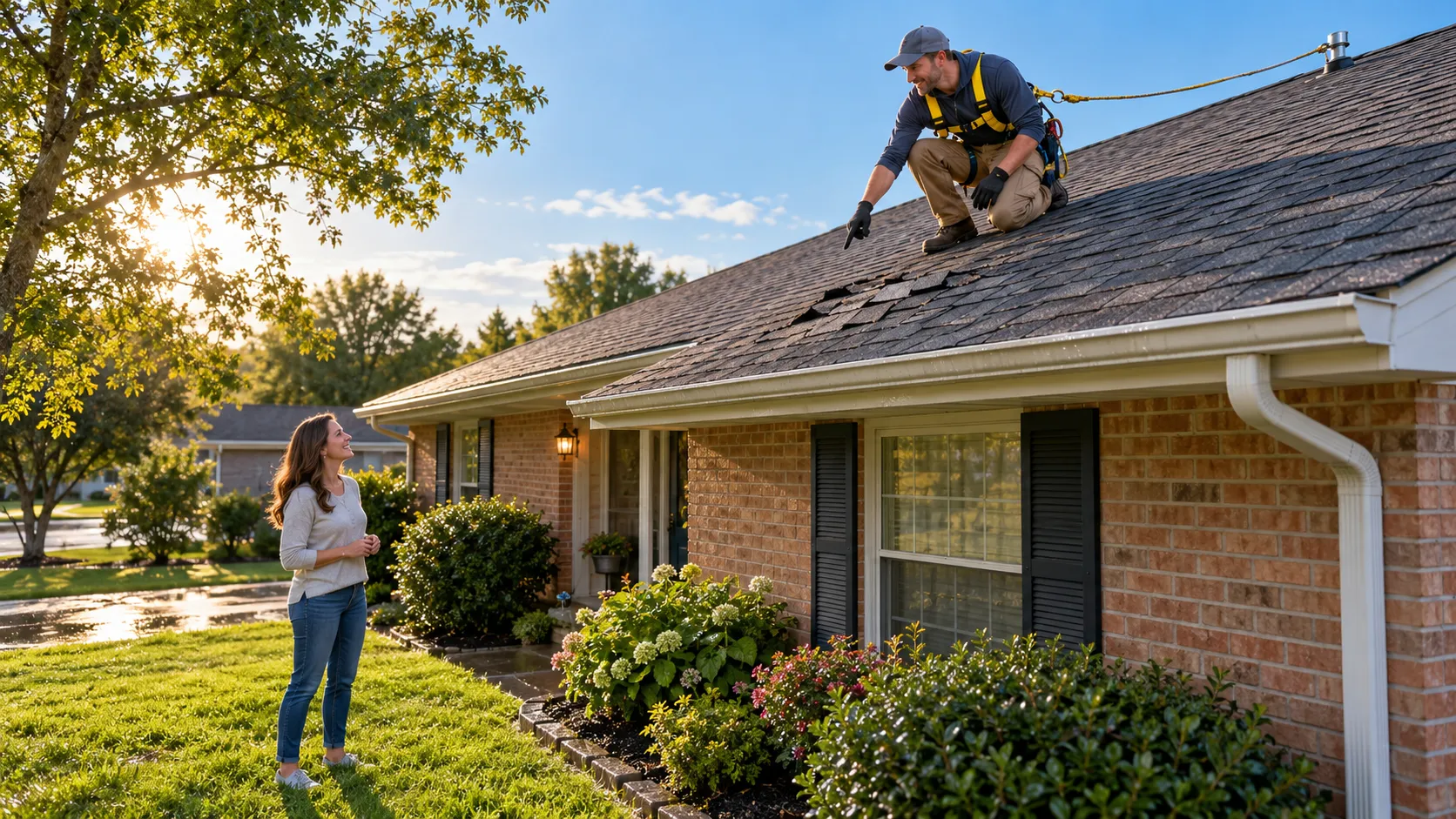
Request an estimate
A roof problem can feel scary when you have never dealt with one. Water stains, missing shingles and drips after a storm all raise the same questions: what will this cost, and who should I trust?
Remainingunit Roofing is a referral service. We do not do the roof work. We connect homeowners in Dallas and the Dallas area with independent local providers who inspect the roof and give a written quote.
This page walks you through the basics. You will see what you can safely check from the ground, what needs a pro, and which price drivers matter most. You will also learn how to read a quote line by line. Know the price drivers, compare written quotes, and you can choose with less stress.
If water is coming in, protect your home first. Move furniture and rugs away from the spot. Set a bucket under the drip. Lay a towel around it.
Then take photos of the stain and any wet areas. You will want them for quotes and for your insurer.
You can learn a lot without a ladder. Walk around the house and look up. Check for shingles that are curled, cracked or missing. Look for bits of shingle in the flower beds. Peek at the gutters for gritty granules.
Binoculars help. So does a phone camera with zoom.
Stay off the roof. Wet shingles are slick, and a fall can cost far more than any repair. Pros use harnesses, roof jacks and training you do not have.
Keep your own work to the ground and the attic. Leave anything on the roof surface to a provider.
Heavy downpours push water into any gap. Wet decking goes soft. Wet insulation stops working and can grow mold. A fix that costs a little now can turn into a bigger job after a few storm seasons.
Hot, humid summers add to it. Hot attics bake shingles and make them brittle.
If a tree limb hit the roof or shingles blew off, say so when you ask for help. Many providers can respond quickly to urgent cases, but availability varies. Request a callback to check provider availability.
Storm damage repair often starts with a temporary cover, then a full fix once the weather clears.
Most repairs fall into a short list:
Each one has a different price, so ask the provider to list them on separate lines.
The wet spot on your ceiling is rarely under the hole. Water runs along rafters before it drips. A provider checks the attic, follows the stain uphill, and then inspects the roof outside.
Finding the true source takes skill. It is also why a guess-and-patch job often fails.
Know the price drivers before you compare quotes:
A quote that skips these details is hard to compare.
Repair makes sense when damage is limited and the rest of the roof is sound. Replacement may be wiser when the roof is near the end of its life or has many problem spots. Paying for several repairs can add up to more than one new roof.
After a big hailstorm, hail damage roof replacement may be the better value. Ask the provider to explain why, with photos.
Indoors, a bucket, a tarp over furniture and a clear path for water are fine. In the attic, you can move insulation aside to see the damp area.
Tarping the roof itself is a job for a pro. A poorly secured tarp can blow off and cause more harm.
Asphalt shingle repairs are common and usually simple. Tile can crack when walked on, so it needs careful handling. Metal roofs may need new fasteners or sealant at seams. Flat sections need special membranes and seams.
Many ranch homes here have low-slope sections. Those can pool water after heavy rain.
Older pier-and-beam houses may have thin decking or old layers of shingles. A provider may find more work than expected once the surface is open. Ask how extra rot would be priced before work begins.
When you talk to local roofing contractors, ask for a written quote with materials, labor and cleanup listed. Ask about their warranty in writing. Ask if they carry insurance. Check that they are licensed where your area requires it.
Compare at least two or three. A quote that looks surprisingly small can leave out key items, so read each line.
Some policies may cover sudden damage, such as a storm. Check your policy. Providers can often help document damage for a claim, so keep your photos and any written findings.
Request an estimate, tell the provider what you see, and compare written quotes side by side. You decide who does the work.
A provider checks the attic and roof surface to trace water back to where it actually gets in.
Missing, cracked or lifted shingles are replaced and sealed to match the rest of the roof.
Worn flashing, pipe boots and vent seals are resealed or replaced where leaks often start.
After wind or hail, providers can make temporary covers and plan the full repair when weather allows.
These are typical U.S. ranges. Your price depends on roof height, pitch, materials and hidden damage. Treat the numbers as a starting point, and compare written quotes from more than one provider.
| Repair item | Typical range | Notes |
|---|---|---|
| Replace a few shingles | $150 – $500 | Small, easy-access areas cost less |
| Flashing repair | $200 – $800 | Chimneys and valleys take more time |
| Pipe boot or vent seal | $150 – $450 | Common cause of small leaks |
| Leak repair with decking fix | $400 – $1,800 | Depends on how much wood is rotted |
| Gutter repair or reseal | $100 – $500 | Longer runs and height raise the price |
| Roof inspection and report | $100 – $400 | May be credited toward the repair job |
Note the stain or damage, take photos, and protect belongings. Stay on the ground and out of the attic if unsafe.
Tell us what you see and where you are. We connect you with a local provider.
Look at scope, materials, warranty and total price. Ask questions about any line you do not understand.
Pick the provider you trust, confirm the schedule in writing, and keep records of the work.
We explain what drives roofing prices in simple words, so a first repair feels less confusing.
Homeowners get matched with independent providers who work in your part of the region.
You can compare itemized quotes side by side before you agree to any work.
Requesting an estimate carries no obligation, and you choose whether to move forward.
Tell us about your roof and request an estimate. A local provider from our network will follow up so you can compare written quotes at your own pace.
No obligationMany small repairs run from a few hundred dollars up to about $1,800 across the U.S. Steep roofs, rotted decking and hard access raise the price. Get a written quote and compare more than one before you decide.
You can do safe tasks from the ground, like checking for missing shingles and moving items indoors. Work on the roof is risky and safer left to a pro with safety gear, especially when it is wet.
Some policies may cover sudden damage, like storm harm, but not wear and tear. Check your policy. Providers can often help document damage for a claim.
Tell us about your roof and request an estimate. A local provider from our network will follow up so you can compare written quotes at your own pace.
No obligation